
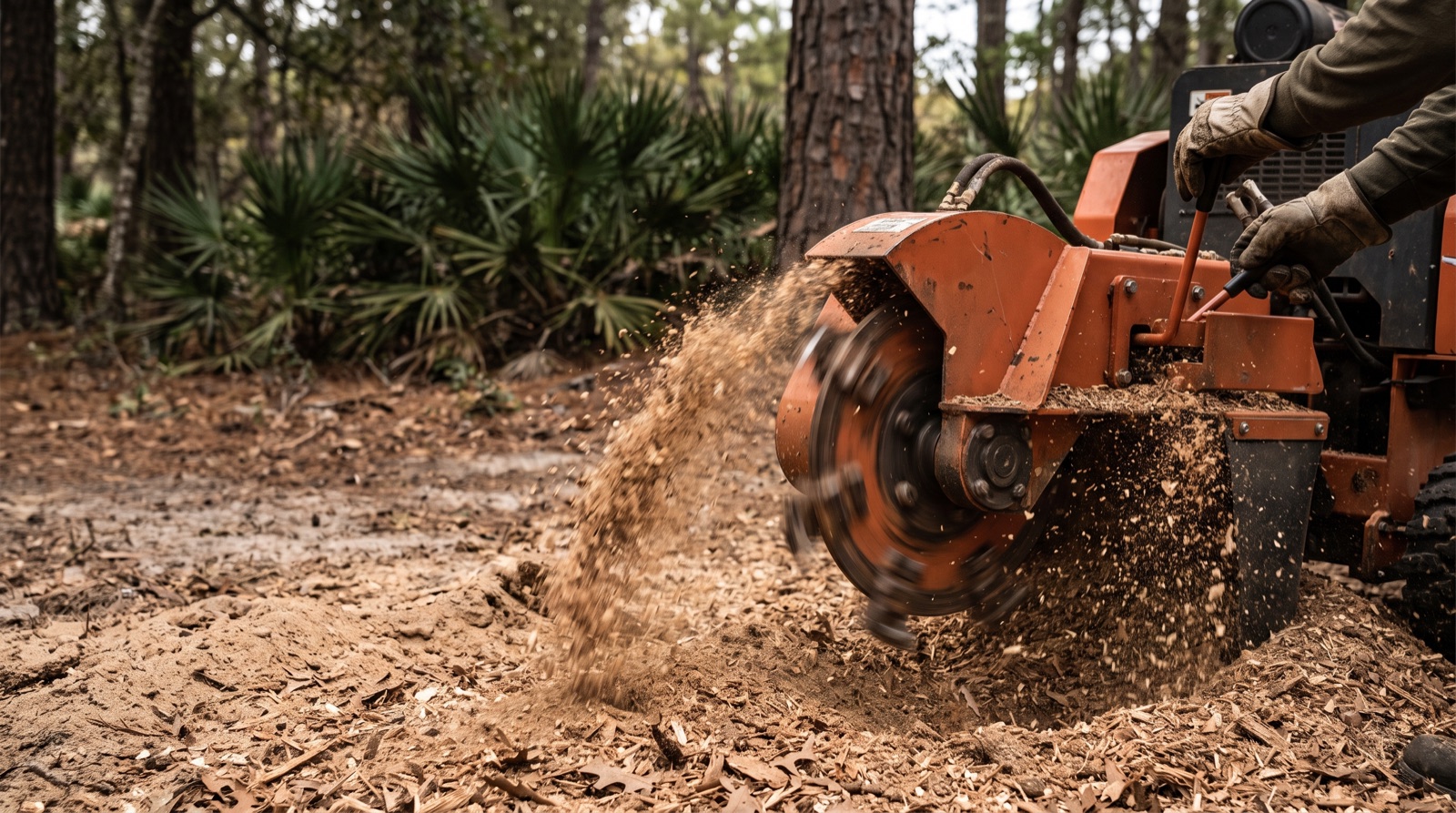
Stump grinding in Jacksonville typically runs about $100–$400 per stump, priced by diameter (roughly $3–$5 per inch), with discounts for multiple stumps. Sandy Northeast Florida soil makes grinding faster and cleaner than clay-heavy regions. Grindings can be hauled off or left as mulch. Free estimate.
When a tree comes out, the stump almost always stays — a low, stubborn hump of wood and roots that a chainsaw can't finish and a shovel won't budge. Stump grinding is how you actually get rid of it. A purpose-built machine chews the stump down below the surface so you can lay sod, plant, or put the space back to work. 904 Tree Service routes your job to a licensed, insured Jacksonville crew with the right-sized grinder for the stump — from a walk-behind unit for a backyard palm to a towable machine for a two-foot oak.
Grinding vs. full stump removal
People use "stump removal" loosely, but there are two very different jobs. Grinding uses a rotating cutting wheel to reduce the stump to chips, in place, without disturbing the surrounding yard. It's faster, cheaper, and far less invasive — most single stumps are done in well under an hour. Full removal means pulling the entire root ball out of the ground with an excavator or by hand, which tears up a wide area of lawn, leaves a large crater to backfill, and costs considerably more. For the vast majority of homeowners who just want the stump gone so they can move on, grinding is the right call. Full extraction only makes sense when you need the ground completely clear of roots — for a pool, an addition, or a foundation.
Why grind the stump
A stump left in the yard is more than an eyesore. Grinding it out lets you:
- Replant or lay sod — reclaim the footprint for grass, a garden bed, or a new tree instead of mowing around a dead hump.
- Stop termites, ants, and other pests — a decaying stump is an open invitation, and in Florida that's a short walk from the stump to your house.
- Head off fungus and rot — decomposing stumps sprout mushrooms and can spread wood-decay fungi to nearby healthy trees.
- Remove a trip and mow hazard — a low stump hidden in grass wrecks mower blades and catches toes.
- Reclaim the space — flat, usable ground for a patio, play set, fence line, or just a clean lawn.
How stump grinding works
The machine does the heavy lifting. A stump grinder spins a steel wheel studded with carbide teeth that shave the wood away layer by layer, sweeping side to side as it works down. A typical grind takes the stump to about 4–8 inches below grade — deep enough to disappear under sod and level with the lawn. If you're planning to replant a tree or shrub in the same spot, the crew grinds deeper to clear more of the root crown so new roots have room. The whole process is contained: no chemicals, no big equipment rutting across your yard, just a clean cut down into the ground where the stump used to be.
For typical prices on every service — removal, trimming, stumps, palms and storm work — see the full Jacksonville tree service cost guide.
What happens to the grindings and roots
Grinding turns the stump into a pile of fine wood chips — more volume than you'd expect from one stump. You've got options. The grindings make excellent free mulch for beds and trees, or they can be raked back into the hole to backfill it level. Prefer a clean slate? The crew hauls the material off and leaves clean, tamped ground ready for topsoil and sod. On the roots: the grinder also chases surface roots — the ones that lift a lawn, crack a driveway, or buckle a walkway — reducing them below grade too. The deeper anchor roots are left to decompose naturally, which, thanks to Jacksonville's sandy, well-drained soil, happens faster here than in heavy clay.
Stumps you're tired of mowing around?
Get a licensed, insured Jacksonville crew out to grind them below grade and hand you back a usable yard. Multiple stumps? Ask about the multi-stump discount.
Call (904) 371-6603Sandy soil makes it easier in Jacksonville
Northeast Florida's sandy, well-drained soil is genuinely an advantage here. It's loose and free of the rock and dense clay that slow a grinder and beat up its teeth, so the wheel cuts faster and cleaner and the job wraps up sooner — which keeps the price down. That same sandy ground drains and aerates well, so the anchor roots left behind break down quicker, and the ground is easy to backfill and replant. The one catch is what put the tree at risk in the first place: sandy soil lets shallow-rooted trees lean and topple in storms, which is why so many Jacksonville yards end up with a stump to grind after hurricane season. If a storm left you with more than a stump, see our tree removal and land clearing pages.